J.M Coetzee's Waiting For The Barbarians
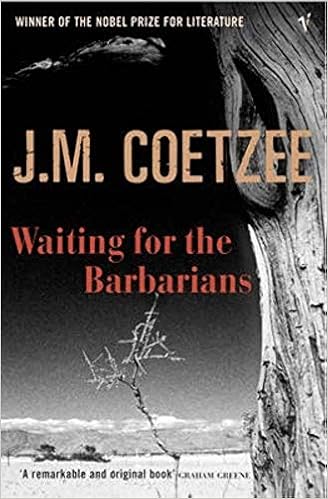
Published in 1980, J.M Coetzee's Waiting for the Barbarians, can be considered a relevant text in our times because of its portrayal and discussions on how power relations work in a culture, nation or human society at large. The novel follows the experiences of an unnamed magistrate who works for an unnamed Empire. Through the magistrate's experiences Coetzee presents the horrifying realities of colonial life; of the violent tortures exacted upon the supposed 'Barbarians'. The novel is a good example of the postcolonial discussion on how the 'Other' is constructed and narrated as well as looked at by the one in power.
The most intriguing part of the novel was the Magistrate's experience with the Barbarian girl. After being exploited and physically tortured by Colonel Joll, the girl is looked at with pity by the Magistrate when he finds her begging in the streets. He takes her to his room and treats her wounds. The Magistrate's feelings towards the girl are unknown, but he is stricken by the urge to clean her and wash her. Though the Magistrate doesn't seem to reflect much on this but it is clear that there is definitely a sexual tension between him and the girl when they are together. barbarian girl is reluctant to speak about what happened to her and her family, when asked time and again by the Magistrate. She remains silent for most of the encounter. The Magistrate also seems to forget the power dynamics while reflecting on his actions and feelings towards the girl. Further when the Magistrate finally realizes he might have fallen in love with the girl, he tries to stop her from leaving; even though he was the one who decided to send her back to her people. Thus, the relationship is so volatile that it becomes difficult to pin it down to one perspective. Above all, it is a great example of how gender, race, sexuality, etc function in power structures.
Another strikingly unique feature of the novel is the namelessness of the characters except Colonel Joll. Neither the Magistrate nor any other character, not even the Empire, has a name to identify with. Thus the idea is whether a name can reflect a person's identity and role in the society or not. The Empire doesn't require a name because it is in power but what about others? is the question which comes to mind after observing this aspect of the narrative.

Comments
Post a Comment