Thinking Activity: The DA Vinci Code
This post is in reference to the questions asked here
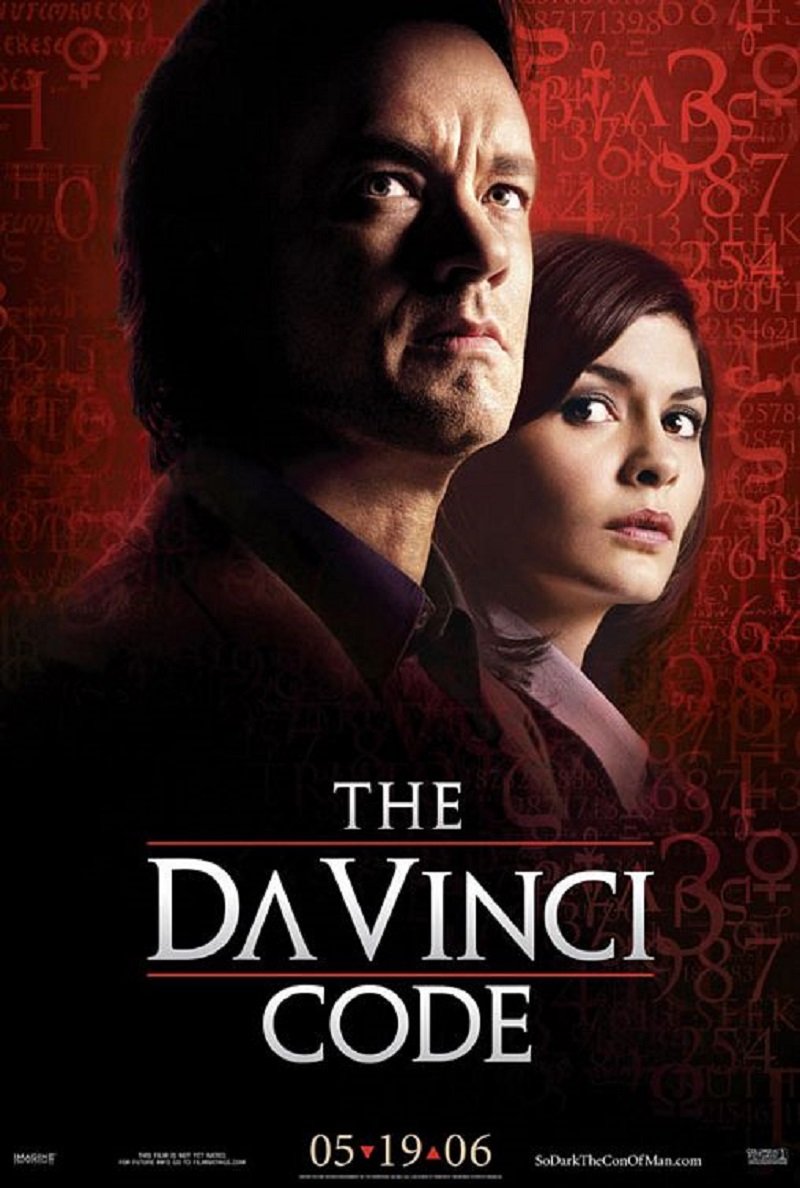
(Click on the images to read about the novel and the film respectively)

Post Viewing Task:
1) The DA Vinci Code has always remained a literature of debate and controversy, since the time of its publication, because of its subverted narrative of Christian faith and belief; especially that of the Holy Grail myth. It is a novel which questions the very foundation of Christian faith; from the portrayal of Jesus Christ as a man to him having a family ('a Royal Bloodline') and that too with a woman who has been condemned as a prostitute for centuries, i.e. Mary Magdalene. It is obvious therefore, that it would invite criticism from the mass. However, Dan Brown states that 'DVC promotes spiritual debate and discussion and is a positive catalyst for introspection and exploration of our faith'. This statement can be justified by the fact that literature has always been a medium to question and think critically about all the aspects of human life and understanding. Religion being one of them. Thus, Brown's novel in this case does serve as a catalyst of introspection and exploration of Christian faith. It provides a good example of how one can think about what one believes in. Why do we believe what we believe? is the question which novels like DVC try to answer.
2) It can be agreed that Akiva Goldsman has retained much of the novel's material regarding the Holy Grail or Mary Magdalene or the Priory of Scion. However, it is not the retention of this material that the movie becomes worth watching; it is rather the way they are used, which becomes worth noting. Goldsman employs only that material which is essential to raise the intrigue and cuts out much of novel's other assertions. Thus Norris J Lacy's argument can be agreed to a great extent.
3) Subjectively speaking, out of Genesis, Paradise Lost and DA Vinci Code, the last one seems to be more convincing. Dan Brown's discussion on the sacred feminine and its subsequent fall because of the rise of patriarchal religion, appeals better than the completely religious narrative of Genesis and the completely artistic and humanist narrative of Paradise Lost.
4) In the two narratives, i.e. Genesis and Paradise Lost, the essential argument is that a woman is responsible for the fall of man. Even when Milton tries to humanize the whole narrative, he still keeps Eve as the reason behind mankind's fall from heaven; thus both of them portray women as the source of sin and impurity. The very idea of the birth of a woman from a man's rib, though metaphoric, is problematic. The readers are kept aloof of the very genesis of the female sex. Whereas DVC though it doesn't say much about the genesis of the female sex, has much to say about how the patriarchal religion took over the pagan faith in the life-giving power of the sacred feminine. Well, that is also problematic. Since, neither of the narratives understand the female self as essentially human.
5) Kenneth Branagh's Ophelia and Elizabeth (in Hamlet and Frankenstein respectively) are objectified representations of stereotypes prevailing in the society. Whereas Hester and Sophie (in The Scarlet Letter and DA Vinci Code respectively) are comparatively stronger female characters. On one hand where the earlier Elizabeth and Ophelia function only in the context of their relation with the male protagonists of their respective texts; on the other hand Sophie and Hester can rather be considered as protagonists of their texts. The similar argument can be made about Hermione Granger's character in the Harry Potter series. The problem or loophole in studying these comparatively stronger female characters, i.e. Hester, Sophie, and Hermione, is that as the plot moves on they start to adopt the stereotypical feminine characteristics and loose their charm as a strong female character. With the passage of time they submit to the larger patriarchal set up of the narratives they are a part of.
6) and 7) In my opinion, religion is an institution where conspiracy and conflicts are bound to happen; since it is a matter of faith and belief. Hinduism is considered to be the oldest religions and is aptly described as a way of life than an established religion. However, it also isn't free from conflicting narratives, myths and stories. A good example for understanding this would be Amish Tripathi's Shiva Trilogy and Ramchandra series. Tripathi, being a Hindu himself, subverts the grand narratives and myths surrounding the two Hindu Gods, i.e. Shiva and Rama respectively. He attempts to portray them as essentially human examples to teach morality and ethics, like Dan Brown in DVC.
(Click on the images to read about the novel and the film respectively)
Post Viewing Task:
1) The DA Vinci Code has always remained a literature of debate and controversy, since the time of its publication, because of its subverted narrative of Christian faith and belief; especially that of the Holy Grail myth. It is a novel which questions the very foundation of Christian faith; from the portrayal of Jesus Christ as a man to him having a family ('a Royal Bloodline') and that too with a woman who has been condemned as a prostitute for centuries, i.e. Mary Magdalene. It is obvious therefore, that it would invite criticism from the mass. However, Dan Brown states that 'DVC promotes spiritual debate and discussion and is a positive catalyst for introspection and exploration of our faith'. This statement can be justified by the fact that literature has always been a medium to question and think critically about all the aspects of human life and understanding. Religion being one of them. Thus, Brown's novel in this case does serve as a catalyst of introspection and exploration of Christian faith. It provides a good example of how one can think about what one believes in. Why do we believe what we believe? is the question which novels like DVC try to answer.
2) It can be agreed that Akiva Goldsman has retained much of the novel's material regarding the Holy Grail or Mary Magdalene or the Priory of Scion. However, it is not the retention of this material that the movie becomes worth watching; it is rather the way they are used, which becomes worth noting. Goldsman employs only that material which is essential to raise the intrigue and cuts out much of novel's other assertions. Thus Norris J Lacy's argument can be agreed to a great extent.
3) Subjectively speaking, out of Genesis, Paradise Lost and DA Vinci Code, the last one seems to be more convincing. Dan Brown's discussion on the sacred feminine and its subsequent fall because of the rise of patriarchal religion, appeals better than the completely religious narrative of Genesis and the completely artistic and humanist narrative of Paradise Lost.
4) In the two narratives, i.e. Genesis and Paradise Lost, the essential argument is that a woman is responsible for the fall of man. Even when Milton tries to humanize the whole narrative, he still keeps Eve as the reason behind mankind's fall from heaven; thus both of them portray women as the source of sin and impurity. The very idea of the birth of a woman from a man's rib, though metaphoric, is problematic. The readers are kept aloof of the very genesis of the female sex. Whereas DVC though it doesn't say much about the genesis of the female sex, has much to say about how the patriarchal religion took over the pagan faith in the life-giving power of the sacred feminine. Well, that is also problematic. Since, neither of the narratives understand the female self as essentially human.
5) Kenneth Branagh's Ophelia and Elizabeth (in Hamlet and Frankenstein respectively) are objectified representations of stereotypes prevailing in the society. Whereas Hester and Sophie (in The Scarlet Letter and DA Vinci Code respectively) are comparatively stronger female characters. On one hand where the earlier Elizabeth and Ophelia function only in the context of their relation with the male protagonists of their respective texts; on the other hand Sophie and Hester can rather be considered as protagonists of their texts. The similar argument can be made about Hermione Granger's character in the Harry Potter series. The problem or loophole in studying these comparatively stronger female characters, i.e. Hester, Sophie, and Hermione, is that as the plot moves on they start to adopt the stereotypical feminine characteristics and loose their charm as a strong female character. With the passage of time they submit to the larger patriarchal set up of the narratives they are a part of.
6) and 7) In my opinion, religion is an institution where conspiracy and conflicts are bound to happen; since it is a matter of faith and belief. Hinduism is considered to be the oldest religions and is aptly described as a way of life than an established religion. However, it also isn't free from conflicting narratives, myths and stories. A good example for understanding this would be Amish Tripathi's Shiva Trilogy and Ramchandra series. Tripathi, being a Hindu himself, subverts the grand narratives and myths surrounding the two Hindu Gods, i.e. Shiva and Rama respectively. He attempts to portray them as essentially human examples to teach morality and ethics, like Dan Brown in DVC.

Comments
Post a Comment